

In the modern American political landscape, the United States Senate has become something it was never meant to be… a slower, more insulated version of the House of Representatives. It reflects the same national passions, the same partisan swings, and the same populist pressures, only filtered through longer terms and larger constituencies.
This was not the original design.
The ratification of the Seventeenth Amendment did more than change how Senators are selected… it changed who they serve. In doing so, it altered the structural balance of the American republic.
The Senate was not intended to represent the people directly. It was intended to represent the States as sovereign political societies.
As James Madison wrote in Federalist No. 62, the Senate would derive its authority from “the States, as political and coequal societies.” That distinction was not procedural, it was foundational.
By removing state legislatures from the selection process, we did not simply reform the Senate. We severed one of the Constitution’s primary safeguards of federalism.
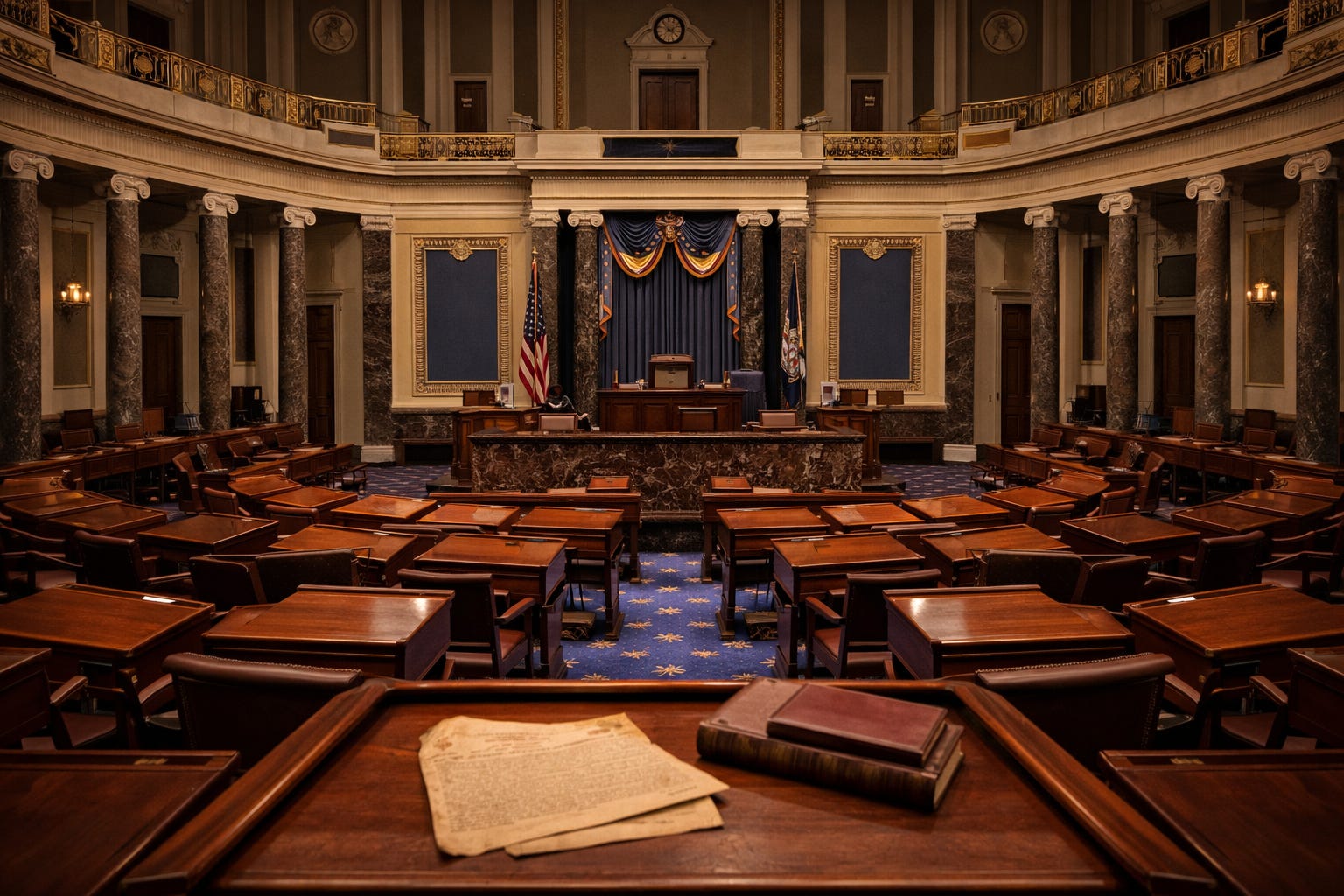
From Representation to Consolidation
The Seventeenth Amendment emerged during the Progressive Era, driven by legitimate concerns: legislative deadlocks, corruption scandals, and a growing national appetite for direct democracy. Reformers believed that popular election would purify the Senate.
But structural changes carry structural consequences.
In bypassing state legislatures, the amendment weakened the institutional link between the federal government and the states themselves. Senators were no longer accountable to the governments whose authority they were meant to defend. Instead, they became responsive to national coalitions, party structures, and increasingly, out-of-state funding networks.
The result was not merely a different selection method, it was a different Senate.
We traded a federal chamber for a national one.
Restoring the Constitutional Anchor
The Constitution originally provided:
“The Senate of the United States shall be composed of two Senators from each State, chosen by the Legislature thereof…”
This design created a dual system of representation:
The House spoke for the people
The Senate spoke for the States
Together, they formed a structural check on centralized power.
Returning to this model would reestablish that balance. Senators would once again be institutionally accountable to their state governments, serving as representatives of state sovereignty rather than national political actors.
This is not a rejection of democracy, it is a restoration of constitutional design. The American system was never meant to maximize direct democracy. It was designed to divide power, channel it, and restrain it.
A republic cannot endure if every institution answers to the same voice.
The Restoration Framework
Structural problems require structural solutions. Restoring the Senate’s original purpose demands more than repeal… it requires a coherent framework of reform.
1. Repeal the Seventeenth Amendment
The first step is the most essential. Repealing the Seventeenth Amendment would restore the authority of state legislatures to select Senators, reestablishing the Senate as a body representing sovereign states rather than national electorates.
2. Establish Term Limits
To prevent the entrenchment of a permanent political class, Senators should be limited to a maximum of twelve years of service.
Proponents, including research from the Heritage Foundation, argue that term limits reduce incumbency advantages and encourage legislative turnover. Critics counter that such limits may weaken institutional knowledge and shift influence toward unelected actors.
Both concerns are valid. But the current system, where tenure often spans decades, has created a governing class increasingly removed from the citizens it serves. A twelve-year limit strikes a balance between experience and renewal.
3. Enable State Recall Authority
Under the current system, states lack any direct mechanism to remove a Senator who abandons their mandate mid-term.
A constitutional amendment should grant state legislatures the authority to recall their Senators, according to laws established within each state.
This would restore continuous accountability, ensuring that a Senator’s primary loyalty remains with the state they represent, not a national party or donor network.
4. Strengthen Qualifications for Office
The Senate was designed to be a deliberative body of experienced leadership. Yet current requirements are minimal: age 30, nine years of citizenship, and residency at the time of election.
A reformed Senate should adopt higher standards:
Minimum age: 40
Natural-born U.S. citizenship
At least 10 years of residency within the state
These changes would ensure that Senators possess both maturity and a sustained connection to the communities they represent, reducing the risk of opportunistic candidacies and “political tourism.”
5. Preserve Continuity in Vacancies
To maintain uninterrupted representation, governors should retain the authority, where permitted by state law, to make temporary appointments in the event of a vacancy.
However, these appointments must remain strictly interim. The permanent selection authority must rest with the state legislature, preserving the constitutional balance while ensuring no state is left without a voice.
Addressing the Objections
Critics of this approach raise familiar concerns.
“State legislatures are just as partisan and corrupt.”
Perhaps. But the question is not whether politics can be purified… it cannot. The question is where power is best constrained. Diffusing authority across multiple layers of government is more stable than concentrating it at the national level.
“Direct election increases democratic legitimacy.”
The Constitution was not designed to maximize democracy. It was designed to balance it. Federalism, separation of powers, and indirect representation were deliberate safeguards against the consolidation of authority.
“Term limits weaken institutions.”
They can. But so can indefinite tenure. The goal is not perfection… it is equilibrium.
A Return to Federalism
The crisis of modern governance is, at its core, a crisis of scale.
As power has accumulated in Washington, the states have receded… not in theory, but in practice. The Seventeenth Amendment accelerated that shift by removing one of the last institutional mechanisms through which states could directly influence federal power.
Restoring the Senate is not about nostalgia. It is about structure.
It is about reestablishing a system in which different institutions answer to different constituencies, creating friction where friction is necessary, and restraint where restraint is essential.
The Senate was designed to be that restraint.
A republic cannot survive if every institution answers to the same voice. The Senate was meant to answer to a different one… the States.
It is time we let it speak again.
In Liberty,
Gary Mullins | Libertas
The Publius Project
Bibliography
Primary Constitutional Documents
Constitution of the United States, Article I, Section 3
Constitution of the United States, Amendment XVII
Research & Policy Analysis
Heritage Foundation — The Case for Congressional Term Limits
Congressional Research Service — Natural Born Citizen Requirement
Legislative & Historical Records
United States Senate — Constitutional Qualifications for Senators
United States Congress — Senate Vacancies and the Seventeenth Amendment
Supreme Court decision: U.S. Term Limits, Inc. v. Thornton